

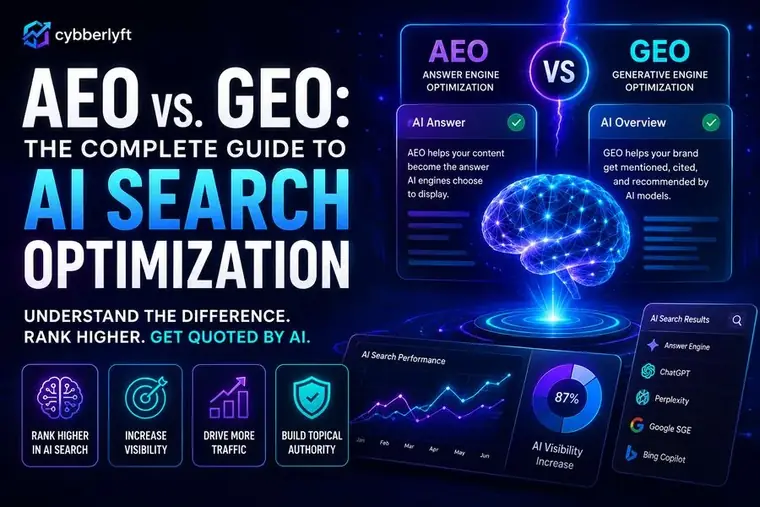
Two years ago, "ranking well" meant one thing: a top-five spot on a Google results page. Today, a growing share of your buyers never reach that page at all. They ask ChatGPT, Perplexity, or Google's AI Overview a question, get a synthesized answer with two or three sources cited, and move on. If your brand isn't one of those two or three sources, you're invisible in that moment — regardless of where you rank in classic search.
That shift is why "AI SEO" has become shorthand for two related but distinct disciplines: AEO (Answer Engine Optimization) and GEO (Generative Engine Optimization). Most teams use the terms interchangeably. They shouldn't — the tactics differ enough that conflating them wastes effort.
What Changed in Search
Classic SEO optimizes for a ranking algorithm that returns a list of links. AI answer engines optimize for something different: a language model deciding which two or three sources are worth summarizing and citing in a single synthesized answer. The ranking factors overlap — technical health, authority, clarity — but the unit of competition has changed. You're no longer competing for a slot in ten; you're competing for a slot in two or three.
This has a practical consequence: pages that are technically well-optimized but written for keyword density rather than genuine clarity tend to lose out. Language models are, at their core, very good at detecting which content actually answers a question versus which content is padding around an answer.
AEO vs. GEO: The Difference
Answer Engine Optimization (AEO)
AEO targets the "answer box" layer — featured snippets, Google's AI Overviews, and voice assistant responses. The content pattern that wins here is direct and structured: a clear question as a heading, a concise answer in the first sentence or two, then supporting detail. Structured data (FAQPage, HowTo schema) still matters here more than almost anywhere else in SEO.
Generative Engine Optimization (GEO)
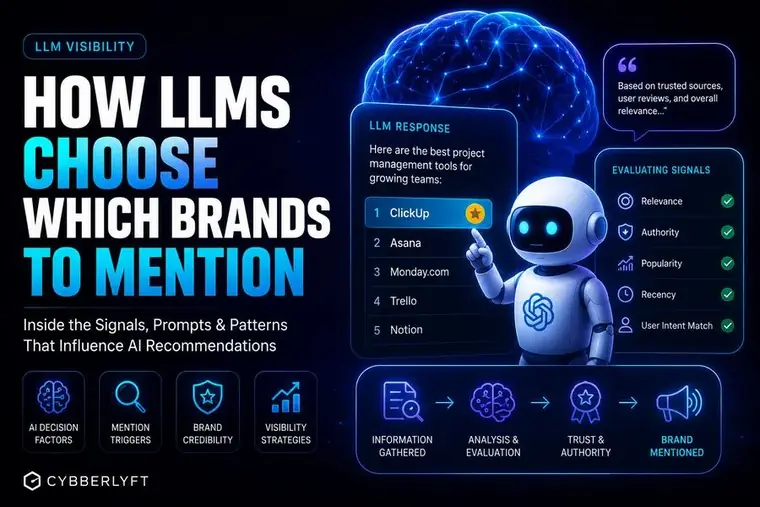
GEO targets a different surface entirely: being cited or paraphrased inside a generative AI's conversational answer, on platforms like ChatGPT, Perplexity, or Claude. These systems aren't just extracting a snippet — they're synthesizing across multiple sources and deciding which ones are authoritative enough to name. Winning here depends less on schema markup and more on being the kind of source a model has learned to trust: specific, well-attributed, consistent across the web, and free of the hedging and fluff that make content hard to summarize confidently.
How LLMs Decide What to Cite
Based on testing prompts across a range of industries, a few patterns show up consistently in which sources get cited:
- Specificity beats generality. A page with a concrete number, method, or example is more citable than one with vague claims.
- Consistency across the web matters. If your claim about your own product or data point contradicts what's said elsewhere about you, models tend to hedge or cite a competitor instead.
- Recency signals help, but aren't everything. Freshly updated pages get more weight in fast-moving categories, less in evergreen ones.
- Clear authorship and expertise markers matter. A named author with visible credentials is cited more often than anonymous corporate copy.
A Practical AEO/GEO Checklist
This is roughly the sequence we run for a new client's technical and content foundation:
- Add FAQPage and HowTo schema to any page answering a discrete question.
- Rewrite hedging, marketing-speak intros into direct, specific first sentences.
- Publish a canonical, citable version of any statistic or claim you want models to repeat — with the source and methodology visible.
- Audit for contradictions between your site and third-party mentions (review sites, press, forums).
- Add named author bios with real credentials to cornerstone content.
- Test your own prompts across ChatGPT, Perplexity, and Google AI Overviews monthly to see who gets cited instead of you.
Measuring AI Search Visibility
Traditional rank trackers don't see this layer. In practice, measurement means running a consistent set of category-relevant prompts across the major AI surfaces on a schedule, logging whether your brand is mentioned or cited, and tracking that alongside classic organic metrics. It's manual right now — the tooling is still catching up — but the trend line over a quarter or two is usually a clear enough signal to act on.
Comments
Comments are currently disabled while we roll out our community guidelines. Have a question about this article? Reach out directly — we read every message.